

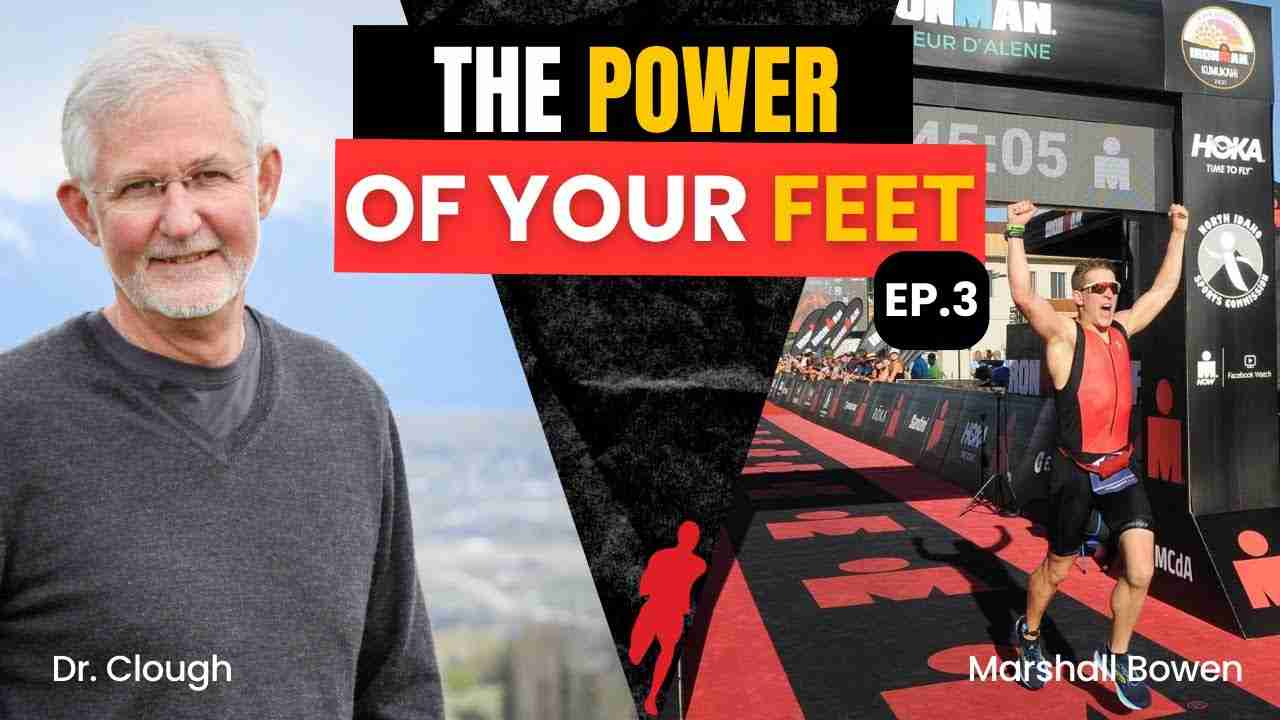
In this conversation, Dr. Jim Clough interviews Marshall Bowen, a young athlete who has embraced ultra sports, particularly long-distance running and Ironman competitions. Marshall shares his journey into endurance sports, his experiences with Cluffy insoles, and how they have positively impacted his performance and injury prevention. He emphasizes the importance of foot health in endurance sports and provides insights into the durability and effectiveness of the insoles, making recommendations for fellow athletes.
00:00 Introduction and Background
04:36 Preventing Foot Injuries in Endurance Sports
09:05 The Durability and Quality of Cluffy Insoles
Dr. Clough (00:00)
Hi, I’m Dr. Jim Clough, and we’re interviewing Marshall Boen today. he has been using our insoles for a little while. and we’re gonna be discussing his use of the product and his impressions So, Marshall, tell us a little bit about yourself.
Marshall Boen (00:13)
Yeah, so I’m 22. When I was kind of in my later teenage years, I decided I wanted to get into ultra sports and just really challenge myself in that way. So junior year, high school, that 16, 17 year old range, I started doing long distance running. So 20 mile runs in the California Hills, Fort Ord, that area, and then also Big Sur and just absolutely, fell in love with it. next thing I decided to do was, you know, I wanted to do an Ironman. So I started training, I didn’t even know how to bike at the time. And my swimming was not that great, but you know, my running was solid. So I just kind of built off that and spent a lot of time learning how to bike ride and swim and still not super great at those, but did well enough on, did Ironman, Coeur d’Alene. And that was quite a challenging race that was over 100 degrees Fahrenheit and just got really hot. A lot of people were failing out of the race just due to the heat. It’s a very slow overall race because it’s in the mountains, so a lot of uphill biking and uphill running. And then finished that one top, I think 15 percentile and just a little bit slow to place an age group. Then next race I did…
About a year after that was Panama City, Florida, Ironman. I shaved off a whole hour and placed second overall and age group the 18 to 24 range and got much better percentile overall despite crashing my bike and making it almost unrideable. But it was a great experience and they’re really, really hard races and a challenge. And that’s what I’d love to do.
I’ll be figuring out a hundred mile race, probably somewhere in the south on foot. So we’re excited for that. And the Cloughie insoles will definitely play a part in some of my training, especially in the weight room and definitely some on the running, especially more on the trail side of things.
Dr. Clough (02:08)
So tell us about the Cluffy insoles. So how long have you been wearing those for, Marshall?
Marshall Boen (02:12)
So I’ve used those on a few runs. All my runs are over 10 miles. So they’re typically long enough to really get a feel of how something works. And I really do like how they feel in the shoe. I’ve worked with a lot of, I’ve had a lot of foot injuries in high school doing track and field. I’m not really built for starting fast and hard. I’m built more for long distance. So starting fast and hard, I tweak tendons, pull muscles.
Than kind of pre-stress fracture bones. So a lot of doctors had given me insults to try, including custom ones from even the guy that had done some of Buster Posey in San Francisco, had done a lot of his work, he had some foot issues as well. But none of those really worked that well. I’d like to say some of them were not. They…you know, some are better than others, even the custom ones, but they just, they were too restrictive. I think that’s the issue is they’re just, they had so much support. I have more of a neutral foot. So part of that’s knowing kind of how your feet are, but I like these because they still offer all that support, but they flex. So a lot of the issue is with the custom ones, they’re really nice, but they’re totally rigid. They have no flexibility. So it makes your foot really not do what it’s supposed to do. The foot needs to flex. So your feet just get really tight.
They get really sore and it makes running hurt. So I personally don’t think you should run with any of those really rigid insoles. I like these because they still have all the support, the perfect areas, but they’re not super rigid so your foot can flex. It can do what it’s naturally meant to do. Definitely a big improvement. The other thing that I really enjoyed using them for, and this was what amazed me and got me sold on them in the first place is I had a push test.
So my buddy that first told me about these, he tested my balance naturally, and then he tested my balance when I had my feet in these insoles just straight on the ground. And it was remarkable how big a difference that was. Just had absolutely massive improvements in balance and how much force I was able to take from different directions and still stay stable. So that’s played a, that’s really helped with weightlifting too, because that stability piece is essential, especially when you’re moving lots of weights.
And I do weightlifting to kind of get some of that strength to prevent injuries, but also just to stay in shape and kind of maximize my training.
Dr. Clough (04:36)
you’ve had a history of multiple foot problems, it sounds like Marshall, and you’ve been using the cluffy insoles now. Have you had any foot injuries or foot pains since you’ve been using the cluffy insoles?
Marshall Boen (04:48)
I have not had any injuries or pain on that. So I’d like to say, yeah, really solid so far on that.
Dr. Clough (04:55)
Do you feel more stable when you’re running? Do you feel more of a sense of being connected more to the ground or having more stability in your shoe?
Marshall Boen (05:04)
Yeah, so it changed my foot strike actually, and I just have to be a little mindful of that just because, you know, the body needs to get used to things in time and things have to stretch and, you know, movements have to, you know, you don’t want to go from doing something one way and then totally switch it. So I have been mindful of that, but I typically, when I strike my, and it’s not ideal, but I typically strike with the outside of my foot and then strike in and push off as a way to cushion, which has probably caused quite a few of my problems. When I put those insoles on and ran, my foot, instead of striking out, it striked a lot more neutral and flat. So that was a big structural improvement that I was really impressed by and I realized that pretty quickly. And I’m kind of curious and I stretch a lot, which has kind of helped me with that because if you’re changing how this is going to make certain tendons a lot less stressed and this is going to make certain tendons actually do what they’re supposed to do. So I’ve just been mindful with that stretching to avoid any injuries, but I really like to see how that continues when I’m pushing off than taking up a lot of shock on the side. So I’m kind of curious to see how that evolves and changes my running and makes it more efficient because I already think that’s a great start.
Dr. Clough (06:25)
We’re really delighted you like them so much and you’re certainly doing some pretty grueling type of training and running. I had the privilege of working at the Kona Triathlon event in 2013 and worked at the transition tent between the bike and the run and helping the athletes get their stuff together to transition and then helped pick them up the finish line. And I know how grueling that event can be. I give you a lot of credit for doing that stuff. It’s pretty amazing that people, can actually do that and you’re doing so well at it too. So that’s really wonderful.
Marshall Boen (07:00)
They’re long races. With an Ironman, even if you’re top in the world, it’s right around that 7-8 hour range. For most of us, we’re a lot slower than that. So in my case, it was 11 to 12, and then there’s people that are pushing that race all the way out until midnight.
And then some people that are finishing after the race is kind of officially over, but they’re just going to keep going because that’s kind of the mentality of it. So it’s a really wonderful sport.
Dr. Clough (07:29)
Yeah.
So with a sport like that, I mean, an injury for you would be devastating, right? You have to stop training and back down from where you’re at. I mean, preventing injury is really critical, I’m assuming, for that kind of sport.
Marshall Boen (07:33)
Yeah, I’ve had a few coaches in the sport and the biggest thing that everyone says and is kind of the motto of the sport is most of the people sign up for the race, very few people get to the starting line. It’s not even necessarily about getting to the finish line, it’s about getting to that starting line. And prior to Cluffy and that, I’ve also pushed my body too hard and I’ve actually…one of my half Ironmans and then the Ironman Coeur d’Alene and even, it was one other race. I went into that I was already injured and I just had to hope that, you know, I’d taken enough time off that injury and just was hoping that injury would be fine. So it’s one of those things if you’re kind of pushing, you’re pushing that edge and staying healthy is essential. You are pushing your body probably past what it’s meant to do and you are going to get hurt. It’s just, can you manage your injuries and can you ideally prevent them? So, you know, having good footwear and insoles is definitely included in that. And then, you know, taking care of your body and stretching properly and making sure that everything’s working well is essential. There’s no way around it. If you want to get to that starting line and then if you want to do well in the race, then you have to really be mindful of that, but just to get to the starting line, you’ve got to get your feet taken care of. Good insoles are a big part of that.
Dr. Clough (09:06)
You know, when I was at the transition tent and helping them get from the bike to the run, I was amazed at the amount of foot problems that I saw in the athletes. I mean, just amazing foot issues. They were just pounding their feet to death. I mean, you know, literally, I mean, when you’re functioning at that kind of level, that kind of endurance and so forth and just the training involved. I mean, you’re putting a lot of force on your foot. I mean, I’m almost, you know, the analogy here would be like a race car. I mean, if you’re, if you’re driving a car really fast and you’ve got anything going wrong with that engine is gonna manifest itself when you’re pushing it to the limit. And I think the human body is a lot like that too. You know, when you’re doing what you’re doing, I mean, you have to be functioning very, very well to avoid injury and just avoid foot problems and keep yourself healthy long-term. And we’re really hoping that the Cluffy will assist in that by getting people functioning to their maximal efficiency, if you will, getting the foot working correctly to try to hold your foot in a good position and prevent some of these other problems from developing. So we certainly hope that’s something you experienced long term, you know.
Marshall Boen (10:11)
Yeah.
And I really think that’s gonna be the case for sure on that. And the other thing is, gear has to be made to go the distance. And these insoles are, they’re made in the USA. when you run 10 miles, I would wear through socks. Like those distances will wear through things. And these insoles
Marshall Boen (10:39)
have held up remarkably well. And that’s very impressive. And even under getting damp and wet and taking a lot of friction from foot strikes, they have not faltered. And I have had other insoles that have broken down very quickly. And these don’t have any weak points. And these are just, I really like how they’re made. It’s really, really impressive.
Dr. Clough (11:05)
What would you say to other triathletes and marathon runners about the insole? Do you have any recommendations for them?
Marshall Boen (11:11)
Yeah, I’d say definitely if you’re someone that needs a lot of support, I think that on your foot, like if you’re someone that craves a more supportive shoe, a more supportive setup for your feet, I think they’re a really great tool. If you’re going to be doing weightlifting, I would say that they really shine there too. And then if your shoes are also kind of you know, if some of the shoes that you have might be a little bit more towards their end, putting in a good insole can really make them go a good deal further. But yeah, I’d say for someone that needs a good bit of support, someone that wants to have more stability weightlifting, and someone that wants to really get the extra mile out of their shoes, especially once they get wet or slightly damaged or already have a good amount of miles on them, that insole definitely, definitely work really well for you.
Dr. Clough (12:03)
Okay, Marshall, well, thank you for sharing all that. I hope that’s helpful for other people that participate in these sports. and look forward to following you through your events and wish you all the best. So thank you very much for being part of our call today. Appreciate it.
Marshall Boen (12:15)
Thank you, Jim.
Dr. Clough (12:19)
Okay, you too. Bye.







Share: