

Overview
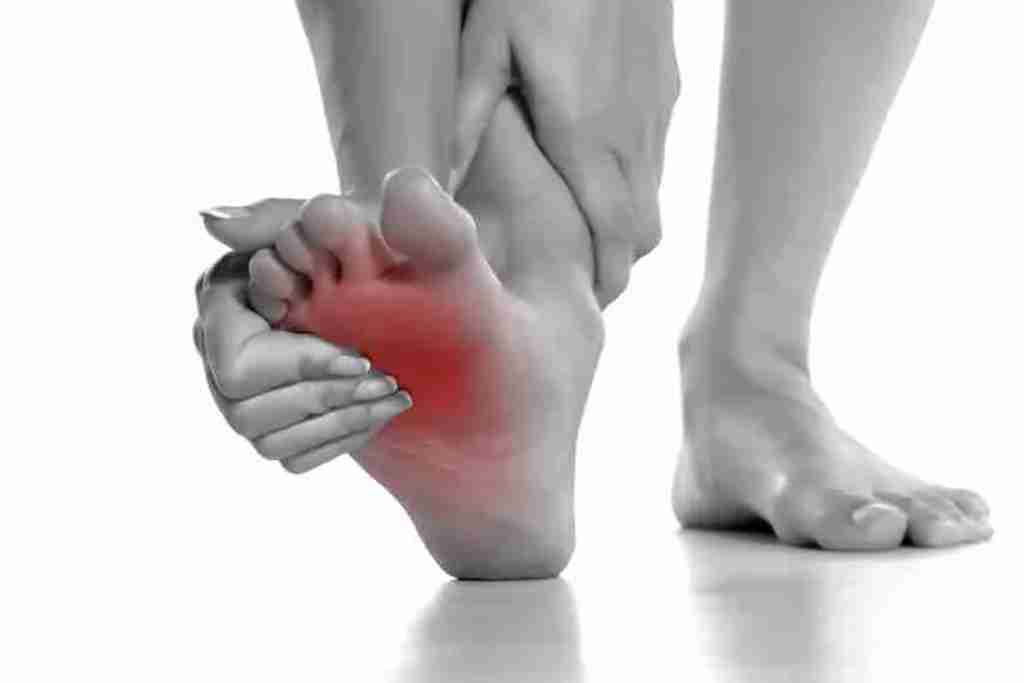
Ball of foot pain is a very common problem that occurs right behind the toes. It can involve throbbing pain, or occasionally numbness and shooting pain that goes into the toes or up into the arch, or instep, of the foot. There is usually no injury associated with this problem, though it often can feel like a bruise, it can be associated with thick skin on the ball of the foot such as a corn or a callous.

Disclaimer: We are unable to make a diagnosis of your condition. What we are describing are common conditions on the ball of the foot. For a diagnosis, you will need to see a qualified medical professional.
What is considered the ball of your foot?
The ball of your foot, clinically termed the forefoot, is the area of the foot located between the arch and the toes. It’s comprised of the metatarsal heads (the rounded ends of the metatarsal bones) and the surrounding soft tissues, including ligaments, tendons, nerves, and fat pads. This area affects weight-bearing, balance, and propulsion during gait. It’s important to understand that the “ball” isn’t a single point but rather a complex structure distributed across the width of the forefoot.
Overview
Ball of foot pain is a very common problem that occurs right behind the toes. It can involve throbbing pain, or occasionally numbness and shooting pain that goes into the toes or up into the arch, or instep, of the foot. There is usually no injury associated with this problem, though it often can feel like a bruise, it can be associated with thick skin on the ball of the foot such as a corn or a callous.
Disclaimer: We are unable to make a diagnosis of your condition. What we are describing are common conditions on the ball of the foot. For a diagnosis, you will need to see a qualified medical professional.
What is considered the ball of your foot?
The ball of your foot, clinically termed the forefoot, is the area of the foot located between the arch and the toes. It’s comprised of the metatarsal heads (the rounded ends of the metatarsal bones) and the surrounding soft tissues, including ligaments, tendons, nerves, and fat pads. This area affects weight-bearing, balance, and propulsion during gait. It’s important to understand that the “ball” isn’t a single point but rather a complex structure distributed across the width of the forefoot.
Causes of Ball of Foot Pain

The bones right behind the toes, the metatarsal bones, are the bones that accept the weight on the ball of the foot. The metatarsal bone behind the big toe is the largest metatarsal; it is supposed to bear the most weight when standing. This first metatarsal bone is unique in that it can move up and down more than the other metatarsals. This bone can be compared to the thumb of the hand. It has a much broader function than the other metatarsals behind the smaller toes.
When this metatarsal moves up, too much of the weight on the ball of the foot is transferred to the smaller metatarsals behind the smaller toes 2, 3, 4, and 5. Because these metatarsals are unable to move up as much as the first metatarsal, much of the weight that is supposed to be taken by the first metatarsal is transferred to the smaller metatarsals. These bones are not designed to accept that much weight.
When extra weight is transferred to this area of the foot, the bone can become damaged or swollen. There are also other soft tissues on the ball of the foot that will become damaged as well; these include the joint capsule, the plantar plate on the bottom of the joint, the ligaments around the joint, the tendons going into the toes, or the nerves between the metatarsals.

Much of this problem is related to the ligament on the bottom of the foot called the plantar fascia. The plantar fascia is affected by a lack of proper motion or movement of the foot. If the plantar fascia is not functioning properly, then abnormal pressure and strain will develop in the smaller metatarsals. When proper motion is restored to the foot, the pressure on the ball of the foot will be balanced and the abnormal pressure in back of the smaller metatarsals can be eliminated or reduced.
A tight Achilles tendon and a lack of motion of the ankle can also cause a significant overload of the ball of the foot. The tight Achilles tendon is usually the result of a problem with the mobility of the foot in general. Restoring proper mobility is important to restore normal motion of the ankle and reduce the contracture of the Achilles tendon.
High-heeled shoes or boots can also cause a significant overload of the forefoot. When the foot rolls too much to the inside this can also result in more trouble with pain and pressure underneath the smaller metatarsals.
Conditions That Cause Forefoot Pain
- Stress fracture or reaction of the metatarsal
- Capsulitis of the metatarsal phalangeal Joint (metatarssalgia)
- Plantar plate injury or rupture
- Tendonitis
- Neuroma
- Corns and calluses
- Plantar warts
- Hammertoes (crooked toes)
- Tight Achilles tendon
- Functional hallux limitus or rigidus (lack of movement of the big toe)
- Bone tumor (either benign or malignant)
- Soft tissue tumor (either benign or malignant)
- Inflammatory arthritis
- Degenerative arthritis
- Gout
- Dropfoot deformity
- Trauma (injury)
- Paget’s disease
- Osteoporosis
The Role of the Plantar Fascia in Forefoot Health
While the plantar fascia is often associated with heel pain, its influence extends to the forefoot as well. This thick band of tissue runs from the heel to the toes and helps support the arch of the foot. When the plantar fascia is tight or dysfunctional, it can alter the biomechanics of the entire foot, including the forefoot. This can lead to increased pressure on the metatarsal heads and contribute to pain and discomfort in the ball of the foot. Maintaining plantar fascia flexibility and health is crucial for overall foot function.
Nerve Entrapment and Forefoot Pain
The nerves that run between the metatarsal bones and supply sensation to the toes can become compressed or irritated, leading to a condition known as nerve entrapment. This can cause pain, numbness, tingling, or burning sensations in the ball of the foot and toes. Morton’s neuroma, a thickening of the tissue around a nerve, is a common example of nerve entrapment in the forefoot. Understanding the role of nerves in forefoot pain is essential for accurate diagnosis and treatment.
The Impact of Footwear on Forefoot Pressure
Beyond heel height, consider the toe box width. A narrow toe box can compress the metatarsal heads, increasing pressure. The flexibility of the shoe’s sole is also important. A shoe that’s too stiff can restrict natural foot movement and shift weight distribution. Even the insole material can play a role in cushioning and support. Choosing footwear that accommodates your foot shape and allows for natural movement is vital for forefoot health.
Beyond Pain: The Importance of Forefoot Function
Forefoot pain can significantly impact your quality of life, limiting your ability to walk, stand, or participate in activities you enjoy. However, it’s important to consider more than just pain relief. Restoring proper forefoot function is important for long-term foot health and preventing other musculoskeletal problems, such as hammertoe deformity. This includes addressing any underlying biomechanical issues, strengthening supporting muscles, and improving flexibility. A functional forefoot allows for efficient weight distribution during gait, promoting stability and reducing stress on other joints in the lower extremities.
When to See a Doctor for Ball of Foot Pain
If ball of foot pain is not specifically related to an injury, it is helpful to try conservative care. Cluffy Everyday insoles can be very effective for this condition. Most pain on the ball of the foot will resolve relatively quickly once the mechanical cause is corrected.
If the problem is not resolved within three months, it would be wise to seek the advice of a qualified medical professional to receive a diagnosis. If you have crooked toes that cannot straighten out (hammertoes), these may need to be corrected to achieve full resolution of your pain.
If the pain is related to an injury, you should seek the advice of a qualified medical professional quickly. X-rays or further studies are necessary if an injury is present.
Risk Factors That Lead to This Condition
- Obesity (Body Mass Index greater than 35)
- Occupations which require standing for a prolonged time, walking in very small spaces regularly, or carrying heavy loads regularly
- Wearing the wrong shoes
- Shoes that do not bend well in the back of the toes and do not support the heel properly
- Shoes that bend too much in the middle of the foot
- Having a flatter foot or a foot that rolls to the inside too much
- Walking on hard concrete surfaces most of the time
- Not wearing proper insoles to allow normal motion of the foot to occur
- Doing strenuous activity without proper shoes, stretching, and insoles to allow the foot to move normally
- Walking up and down hills frequently
- Short steps and a shuffling walking pattern
- High arched feet
- Flat feet
What Activities are Limited Because of Ball of Foot Pain?
Just about all activities will be limited by ball of foot pain. You may find yourself limiting your activities more and more over time just to deal with the foot pain. You will probably spend a fortune trying to find the right shoe to fix the pain. As the ball of the foot hurts more, you will tend to alter the way you walk, which leads to leg pain, knee, hip, and back pain.

If you do not have any deformity of the foot, one will eventually develop, such as a bunion or hammertoes. You will then be more limited in the shoes that you can wear and may also require surgical correction of these problems to restore normal function.
Much of this may have been prevented by proper awareness of the issue when it first presented itself and dealing directly with the cause of the problem at that time.
How Do the Cluffy Insoles Help with Ball of Foot Pain?
Even though there are many causes of ball of foot pain, the most common cause is excessive pressure on the smaller metatarsals. This pain will respond to our Cluffy Everyday insole (formerly Lux Step).
When the mobility of the ball of the foot improves, with the Cluffy Everyday insole, there is improved and balanced weight bearing on the metatarsals. This improved mobility on the ball of the foot results in stabilizing the arch of the foot structure and increased motion of the ankle. Once mobility of the ankle is improved, then the Achilles tendon can be stretched normally when walking and this results in load reduction of the ball of the foot. When the ankle moves correctly, then the knee can become more stable, the hip can move better, and the lower back becomes more stable. Body mechanics dictate that a mobile segment is followed by a stable segment that is followed by a mobile segment, etc.
Improving the motion of the foot not only has a significant impact on ball of foot pain, but it can cause a total realignment of the whole lower extremity bone structure.
Support of all three arches in the foot structure is also important, particularly when standing. The Cluffy Everyday insole is the only insole on the market today that supports all three arches in the manner we do, worthy of a utility patent from the U.S. Patent and Trademark Office. It is of particular importance in ball of foot pain that the transverse arch of the foot is properly supported. Our unique arch support in this part of the foot is addressing pressure on the ball of the foot in the best possible manner.
As far as shoes are concerned, it is important to state that the shoe alone is often not going to be enough to overcome the symptoms of ball of foot pain. However, make sure the shoe allows the foot to bend properly, but supports the heel in a more normal position. Stiff, rocker-soled shoes may help the pain temporarily but should be avoided, as they do not allow the foot to move normally and are counter-productive at addressing the core issues causing your pain. High-heeled shoes will also tend to make ball of foot pain worse.
It is often necessary to stretch. The most common muscles to become tight are the flexor hallucis longus (the tendon on the bottom of the big toe), the gastrocnemius tendon (part of the Achilles tendon and the calf muscle), and the hip flexor tendons including the iliopsoas and the rectus femoris.
Now that you have the Cluffy Everyday insole and a shoe to allow the foot to move better, you actually need to walk better and move through the foot. It is necessary to walk at a faster pace, take a longer step and roll through the big toe properly, swing the arms, and walk like you mean it. This will allow for proper weight-bearing on the metatarsal bones on the ball of the foot. As you start to do this, you should see an almost rapid reduction in pain on the ball of the foot.
Other symptomatic treatments can be employed, if necessary, by using topical analgesics on the areas that are tender, oral anti-inflammatory medication, or cold packs applied to the ball of the foot twice a day. These treatments are considered symptomatic and not addressing the root cause of the problem, but can be very useful in the resolution of symptoms once the root cause of the problem is identified and properly addressed.








Share: